More Than A New Service Label
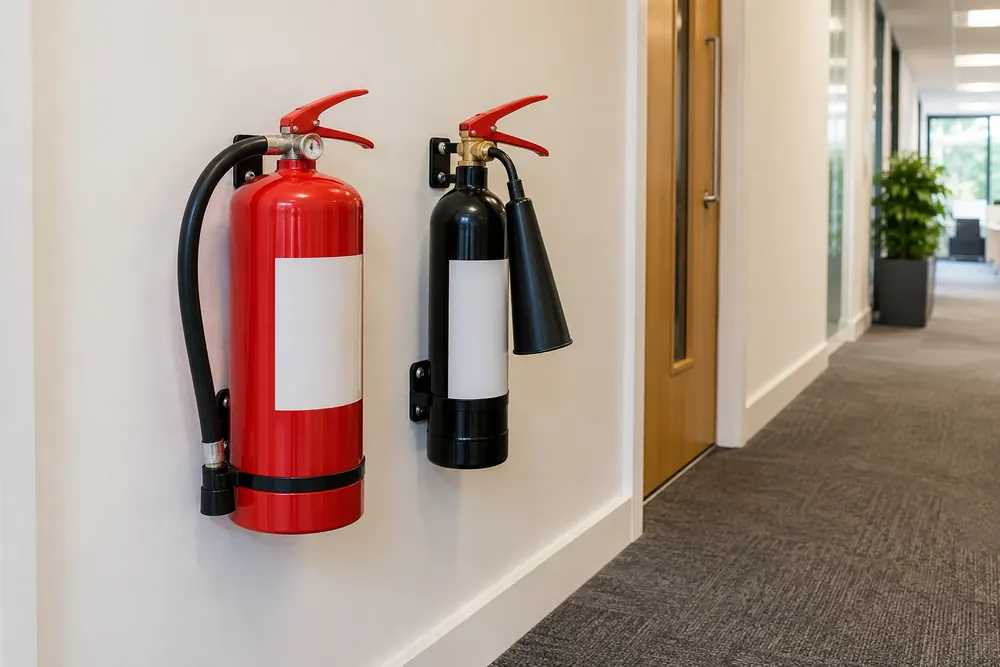
Fire extinguisher servicing checks whether equipment remains suitable and in working order. A visit should consider the extinguisher body, hose or horn, operating parts, safety devices, charge indication where fitted and the maintenance history. The technician also needs to know whether the extinguisher is still appropriate for the surrounding risks.
An extinguisher that looks tidy can still be unsuitable for a changed workplace. Tell us about new cooking equipment, electrical installations, combustible storage or altered partitions. Equipment locations should support safe access and the building fire precautions, with any proposed changes discussed before additional units are supplied.
Choosing Equipment For The Actual Fire Risk
Different extinguishing media have different applications and limitations. Water-based units, carbon dioxide and wet chemical equipment are not interchangeable answers to every fire. Selection should consider the materials present, electrical hazards, environmental conditions and the competence of the people expected to use the equipment.
Do not choose extinguishers solely by colour, price or what another tenant has installed. A catering kitchen, an office escape route and a workshop can need different arrangements. If the risks are unclear, review the fire risk assessment first and ask the technician to explain the basis for any proposed provision.
Standards And Your Maintenance Duties
The Fire Safety Order requires relevant fire precautions to be maintained in an efficient state, efficient working order and good repair. BS 5306-3 covers commissioning and maintenance of portable extinguishers. The standard provides a framework for competent servicing, distinct from the routine visual checks carried out by the building user.
Annual basic servicing is a recognised part of that maintenance framework, with extended servicing or overhaul depending on extinguisher type and history (BSI, BS 5306-3). A maintenance label does not remove your responsibility to notice missing equipment, damage, discharge or obstruction between visits. Keep the service record available for the person managing fire safety.
How A Service Visit Works
First, establish the equipment inventory and review previous labels and records. The technician checks each accessible unit using the relevant procedure and records its condition. Any equipment requiring corrective action should be clearly identified, with the reason and the proposed remedy explained.
Agree the treatment of defective or discharged equipment before work proceeds. A quotation should distinguish routine servicing from replacement parts, recharging, extended work and new extinguishers. At handover, check the inventory against the equipment in the building so that missing units or inaccessible rooms are not silently overlooked.
Checks Between Technician Visits
Your own visual checks should look for equipment in its designated place, unobstructed access, visible damage and signs of use or tampering. Where an extinguisher has a gauge, an abnormal indication needs attention. Do not wait for the next scheduled service if a unit has been discharged or appears unsafe.
Make the checks part of a simple building routine with a named person and a written record. Staff should understand the evacuation procedure and the limits of their training. Extinguishers support the fire strategy, but escape and raising the alarm must take priority over an attempt to tackle a fire.
What Changes The Quotation
The number and type of units, the maintenance due, site access and equipment history affect the quotation. Missing records may make it harder to establish whether extended servicing or overhaul is required. Damaged, obsolete or unsuitable equipment can need a separate recommendation rather than another service label.
Send an inventory or photographs of the equipment and service labels if you have them. Confirm whether the quote includes documentation, consumables and any agreed disposal. If a technician suggests replacing equipment, ask for an itemised reason so that you can distinguish a safety issue from an optional change to the building layout.
Your Service, Step By Step
Confirm The Inventory
Share the number and type of extinguishers and any existing service records.
Inspect And Service
Have each accessible unit checked using the appropriate procedure, with defects recorded.
Agree Any Further Work
Review proposed repairs or replacements and retain the completed maintenance record.
Guidance reference: BSI standard information. The agreed scope and the building’s circumstances determine the work required.
Before You Send Your Enquiry
Include the premises location, building use and the reason for the visit. Explain any access restrictions and whether there is a previous report, maintenance record or equipment schedule available.
Work across Birmingham and nearby areas can be scoped around your premises. Your enquiry is a starting point, with the quotation and appointment arrangements confirmed before you book.
Ask about fire extinguisher servicing ↗