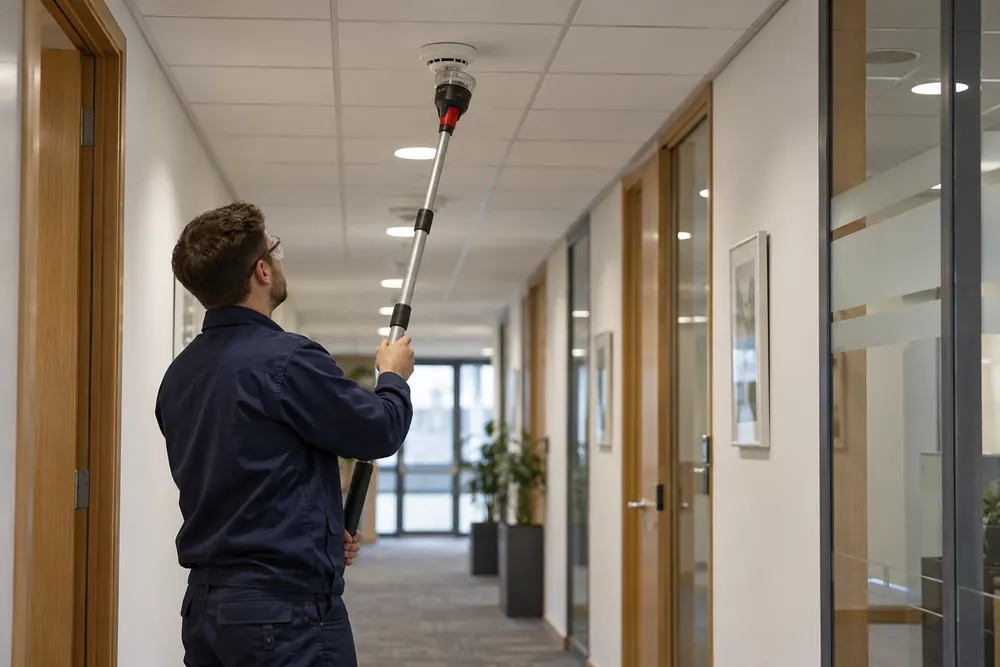
Maintenance With A Clear Scope
A fire alarm maintenance visit should examine the installed system and the information needed to look after it. That includes the control equipment, power supplies, accessible devices, logbook and relevant interfaces. A service report should state what was checked, what could not be accessed and what needs attention.
Tell us the panel make, approximate number of devices and any known faults when you enquire. A photograph of the panel and the latest service record can help establish the likely scope. Do not reset or silence an unexplained alarm simply to make the building feel normal without following the premises procedure.
User Tests And Specialist Visits
Routine user tests and specialist maintenance are different tasks. The building user checks operation in line with the documented procedure and records the result. A competent technician undertakes the planned inspection and servicing that needs specialist knowledge, suitable equipment and access to the relevant parts of the system.
The programme should reflect the system, the building risk and the applicable guidance. Ask the maintainer to explain the proposed intervals and device-testing programme. If records are incomplete, the initial visit should make that limitation clear instead of assuming that every detector has recently been tested or every interface verified.
Standards And The Responsible Person
BS 5839-1:2025 is the non-domestic fire alarm code of practice and includes maintenance. The Fire Safety Order sets the broader duty to maintain relevant fire precautions. Employing a contractor supports that duty, but it does not remove the need for local checks, accurate records and a response to reported defects.
An existing system should be assessed in context. A newer standard does not mean every older installation automatically requires wholesale replacement. Ask which findings concern a fault, a maintenance requirement, a change in the building or a design issue that needs a separate review and agreed recommendation.
What Happens During A Visit
Review the logbook and recent fault or unwanted-alarm history before testing begins. Agree any arrangements with monitoring providers and building users so that controlled tests do not lead to avoidable disruption. The technician should follow a planned inspection procedure suited to the system and its documented design.
At completion, the panel and connected arrangements need to be returned to their agreed operating state. The report should identify defects and any outstanding restrictions, with advice on further work where needed. Building managers should be told about unresolved issues promptly rather than discovering them later in a service invoice.
Dealing With Faults And Unwanted Alarms
A repeated detector activation may relate to contamination, the environment, an unsuitable device or a genuine hazard. Replacing equipment without investigating the cause can leave the pattern unchanged. Give the maintainer details of the time, location, activity and panel indication for each event.
Isolations need to be controlled and recorded because they can remove protection from part of a building. Follow your premises procedure and seek competent advice about temporary precautions. If there are signs of fire, use the emergency arrangements rather than treating the incident as a routine maintenance enquiry.
Records, Access And Cost Factors
The number of devices, system type, interfaces, monitoring arrangements and accessibility affect maintenance pricing. A large warehouse with high-level detectors presents different access needs from a small office. Missing drawings, undocumented alterations and persistent faults can require investigation beyond a normal planned service.
Ask whether the quotation includes planned visits, parts, call-outs and access equipment, or whether these are separate. Keep service certificates, defect reports, logbook entries and records of remedial work together. If responsibility changes between tenants or managing agents, hand those records over so that the maintenance history is not lost.
Your Service, Step By Step
Review The History
Share panel details, logbook entries, faults and previous service records.
Inspect And Test
Agree testing arrangements, then carry out the scoped inspection and servicing.
Record And Resolve
Confirm operating status, retain the service report and arrange attention to outstanding defects.
Guidance reference: BSI standard information. The agreed scope and the building’s circumstances determine the work required.
Before You Send Your Enquiry
Include the premises location, building use and the reason for the visit. Explain any access restrictions and whether there is a previous report, maintenance record or equipment schedule available.
Work across Birmingham and nearby areas can be scoped around your premises. Your enquiry is a starting point, with the quotation and appointment arrangements confirmed before you book.
Ask about fire alarm maintenance ↗